
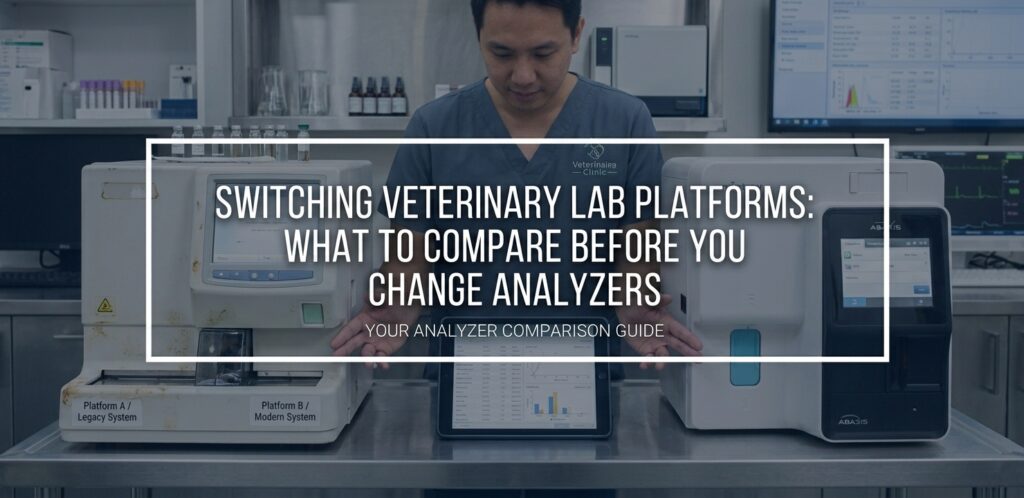
Before switching veterinary laboratory analyzers, you may want to consider the following factors. These include cost per test, flexibility of tests, availability of reagents, support and training. All of these factors can impact the running costs and reliability of your tests.
When comparing veterinary laboratory analyzers, consider how well the new equipment will fit in with your workflow. Is it suitable for frequently requested tests? Is it user-friendly? What is the service like?
If you’re based in the Philippines, you may want to consider whether there is good local technical support and reagent availability. Taking your time to compare your options can help to determine if switching is a good idea.
When Is It A Good Idea To Switch Veterinary Lab Analyzers?
Some clinics may not need to switch their lab machines as the current analyzer can complete daily tests without causing too many issues. However, as the number of patients increases or services increase, you may notice issues with the current analyzer.
You may want to consider switching analyzers if you’re having issues managing reagent costs, not having enough test variety or experiencing regular technical issues. Not having enough consumables and long wait times can cause issues with daily testing.
Before deciding to switch, determine how often you experience issues and how much it is impacting your clinic. If the analyzer is still providing reliable results and you’re receiving good support, then there may not be a need to switch. Consider what issues you’re having with your workflow and try to find a solution.
How Do I Calculate Cost Per Test?
A good place to start is to work out your cost per test. Whilst the cost of the analyzer is important, the running costs can have a bigger impact.
Consider how many samples you run monthly, plus reagent costs, QC, calibration and consumables. Additionally, expired reagents, repeated testing, maintenance and financing.
If you’re running 10 tests a day, this could cause increased running costs over someone running a few tests weekly. Even if you’re getting a cheaper reagent package, the cost per test may not be as low. Work out how much it costs based on how many tests you actually perform.
How to estimate your cost per reportable test
Cost per reportable test = Total laboratory operating costs ÷ Number of valid patient results released
For a more accurate comparison, calculate this over the same period for each platform.
Expense | What to include |
Equipment | Purchase, lease, or financing costs |
Reagents | Routine supplies used for patient testing |
Quality control | Controls, calibration materials, and related testing |
Waste | Expired reagents, unsuccessful runs, and repeated tests |
Maintenance | Servicing, parts, and preventive maintenance |
Other expenses | Additional labor, utilities, and applicable operating costs |
This is a planning formula, not a quoted price comparison. Actual costs depend on each clinic’s workload and supplier arrangements.
Why Is Reagent Flexibility Important?
Having flexible reagents can have an impact on how you manage costs and testing. Some analyzers have individual tests, whilst others have set panels or reagent packs. If you’re doing lots of routine chemistry tests, set panels may be a good option. However, if you need specific tests, having more flexibility may be better.
When looking at reagent costs for vet analyzers, consider not just the cost of the packs but also how many tests they cover, how long they’ll last and if they need any special storage. It may also be worth finding out if there is a minimum order and how available they are. Having excess or expired reagents can cause unnecessary costs.
What Should I Compare In The Test Variety?
Having an analyzer with more tests available may not be the best option. Consider if it has the tests you regularly need. If you’re doing hematology tests, ensure it has the right CBC parameters, white blood cell differential and platelet testing. If you’re doing chemistry tests, ensure it has the right tests, samples and animals it can test.
Consider how easy it is for your staff to view, store and access results. Some features may not be used often. Consider what tests you currently need and choose an analyzer that will help with your workflow.
How Important Is Local Support And Uptime?
If your analyzer breaks, this can cause delays to daily testing. You may need to send samples to external labs.
If you’re based in the Philippines, it’s important to have good local support. Consider where the service team is based, how quickly they can respond and if they have easy access to spares. If you’re not based in Metro Manila, consider what support they can offer.
Whilst you may not be able to avoid equipment issues, having good support can reduce downtime. Consider what warranty, maintenance and troubleshooting they can offer.
What Should I Know About Reagent Availability?
Having a reliable supply of reagents will help to keep your daily testing running smoothly. Before switching, consider how available they are, how quickly they can be delivered and any minimum order requirements. Some may need to be stored in a fridge or specific way which can cause issues in hot weather or if they take a long time to deliver.
Consider how many tests you perform monthly and how often you have excess or expired products. This will help you plan for the future and reduce unnecessary costs. Choose a supplier that can provide reliable deliveries.
How Do IDEXX Or Abaxis Alternatives Compare In The Philippines?
If you’re looking for an IDEXX alternative Philippines or Abaxis alternative, you may want to consider equipment that fits within your budget and testing needs. It may not be that your current analyzer is causing issues, but you may want to look at other options.
Different brands will have different tests, consumables and features. Consider what tests you regularly do, what animals they can test and what the running costs will be. Ask for product demonstrations and up-to-date quotations.
How Can I Compare Equipment Without Causing Delays To Patients?
Switching can cause delays to your patient testing. Ensure you’ve planned it properly and given your staff time to get used to the new equipment.
Consider what tests you’re doing and what processes depend on your current analyzer. Try to schedule installation and training during quieter periods.
It may be worth having your old analyzer available whilst the new one is tested. Your vets should also consider any differences in reference ranges. Having a plan will help to reduce any disruption.
What Should I Include In My Veterinary Lab Migration Plan?
Consider what analyzers you currently have, what tests are frequently requested, reagent availability and maintenance history. This will help to determine what you need from the new equipment and what improvements you can make.
Work with your supplier to ensure everything is installed, staff trained and what equipment you’ll need. Before using the new analyzer for patient testing, ensure it’s working correctly, reference ranges are correct and your team understands the new processes.
Veterinary Lab Migration Checklist
- Review current equipment, testing demand, and operating expenses.
- Confirm installation requirements, staff training, and consumable supply.
- Establish quality-control procedures and verify analytical performance.
- Review reference intervals, reporting formats, and patient record integration.
- Prepare an alternative testing arrangement during the transition.
What Should I Ask My Veterinary Diagnostic Partner In The Philippines?
When choosing a veterinary diagnostic partner Philippines to rely on, consider what installation, staff training, warranty, reagent availability and technical support they can offer. If you’re not in Metro Manila, consider what delivery times they have and if they can offer local support.
Consider what tests you’re doing daily, what tests are frequently requested and any issues you’re having with your current analyzer. This will help your supplier to recommend the right equipment. Ensure you ask for up-to-date product specifications, written quotations and clear service terms.
What Veterinary Diagnostic Equipment Can I Look At With MAN Pharma?
MAN Pharma can provide veterinary diagnostic equipment and animal healthcare solutions for clinics in the Philippines. They have a range of products available in their published product catalogue. This includes hematology and chemistry analyzers.
For hematology testing, the website lists the ProCyte Dx Vet Hematology Analyzer and ProCyte One Vet Hematology Analyzer. For clinical chemistry, clinics can explore the Catalyst One Vet Chemistry Analyzer, which offers a flexible test menu using dry-slide technology.
These are examples of the equipment available on their website. If you’re interested in switching platforms, ensure they have what you need available now. Consider what the specifications, reagent requirements and support they can offer. They can also talk to you about other veterinary solutions that will fit with your current lab setup.
How Do I Know If Switching Analyzers Is Worth It?
Before switching analyzers, think about what’s prompting the change. Are reagent costs getting too high? Does your current machine have limited testing options or frequent maintenance problems? A new analyzer should address these concerns and make daily laboratory work easier.
It’s also important to compare the costs of keeping your current equipment with investing in a new system. Consider reagent expenses, maintenance, staff training, and your clinic’s expected testing volume.
Choose an analyzer that meets your diagnostic needs without paying for features you rarely use. The right equipment should fit your workflow, deliver reliable results, and be practical to maintain.
Frequently Asked Questions About Switching Veterinary Laboratory Analyzers
When Should I Consider Changing My Analyzer?
You may want to consider changing your analyzer if you’re not getting the right equipment for your tests, having issues with running costs or regular technical issues. Consider what you need and what options are available.
How Do I Compare Cost Per Test?
Work out how much it will cost to run the analyzer over a specific period of time. This should include reagents, QC, maintenance, equipment and waste. Divide this by the number of valid patient results. Ensure you’re using the same assumptions.
Are There Any Alternatives To IDEXX Or Abaxis Analyzers In The Philippines?
You can look at other analyzer manufacturers. Compare the technical specifications, animals they can test, tests available, quality assurance requirements and local support.
Can I Use Reagents From Another Manufacturer?
This will depend on the analyzer. Refer to the manufacturer guidelines. Using unapproved consumables can affect the analytical performance, warranty and equipment. Always confirm with the manufacturer.
How Can I Reduce Downtime?
Plan your installation, training and verification. Have an alternative testing option available. Ensure your staff understand the new processes. Complete the switch before relying on the new system.
Make The Right Decision When Switching Veterinary Lab Platforms
Switching your lab equipment should be well planned. When considering veterinary analyzers, consider more than just the price. Consider reagent costs, maintenance, technical support and daily testing requirements.
Consider how your current analyzer is performing and where improvements can be made. Compare your quotations, equipment and after-sales support.
If you’re planning to upgrade your laboratory, we offer veterinary diagnostic solutions to support your clinic’s needs.Contact us at https://manpharma.ph/contact-us/ to inquire about our FREE Lab Upgrade Assessment and explore suitable equipment options.
For licensed and trained veterinary healthcare professionals. Equipment selection, laboratory verification, and clinical interpretation should follow applicable veterinary standards and manufacturer instructions.