
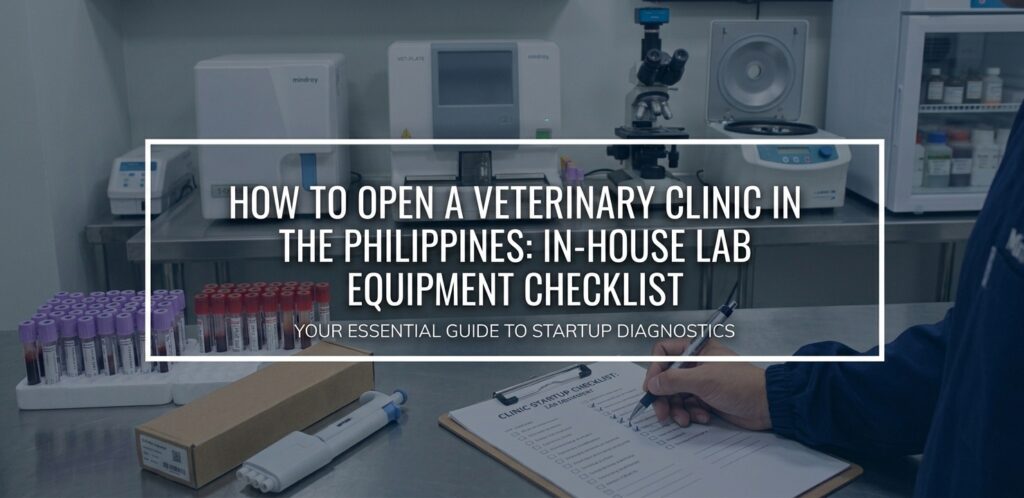
Starting your very own veterinary clinic can be a very exciting time! However, it can be difficult to decide what you need to purchase. Starting a new clinic can involve many elements including getting your premises ready, applying for permits and deciding what diagnostic equipment you will need.
When considering how to start your own veterinary clinic in the Philippines, you want to focus on the essentials. This includes having qualified staff, a compliant premise, examination facilities and reliable diagnostic equipment. If your clinic will have an in-house laboratory, you may want to invest in a veterinary hematology analyzer and veterinary chemistry analyzer. This means that you can have the basics covered and then can move onto investing in imaging and patient monitoring.
This doesn’t mean that you have to have everything. You just need your clinic to be set up so that it can offer the services you want safely and within your budget.
What Should You Invest In For Your New Vet Clinic?
To begin with you should consider what services you will offer in the first few months. You will need different equipment for a small clinic offering consultations, vaccinations and basic diagnostics compared to a clinic offering surgery, hospitalisation and emergency services.
Start off with some basic equipment for your clinic allowing you to safely carry out examinations. This could include:
- An examination table, scales and basic examination tools
- Restraint and handling equipment
- Microscope and sample collection
- Veterinary hematology analyzer
- Veterinary chemistry analyzer
- Storage and sterilization
- Patient monitoring and anaesthesia (if applicable)
You don’t need to invest in everything straight away but there are certain essential pieces of equipment and your staff requirements will depend on what class of clinic you have. Ensure you know what requirements are in place from the Bureau of Animal Industry.
Why Invest In A Hematology Analyzer?
A complete blood count (CBC) is a common laboratory test used in veterinary medicine. This gives information regarding the red blood cells, white blood cells and platelets. This can assist your vets in assessing the patient during examination. If your clinic will carry out in-house diagnostics, investing in a hematology analyzer can benefit you.
If your pet comes in with lethargy, poor appetite or weakness, being able to carry out a CBC can help your vets understand what could be wrong.
MAN Pharma can provide equipment to help with this. A ProCyte One Vet Hematology Analyzer can support 24 whole blood parameters and provide a CBC in under 5 minutes. However, ensuring samples are handled correctly, quality controlled and interpreted by your vet is essential.
What Can A Chemistry Analyzer Provide?
This will give extra information. Whilst a hematology analyzer will provide information regarding blood cells, a chemistry analyzer will measure certain substances in the blood. This can give your vets an idea regarding organ function, metabolic conditions and other concerns. This can make your diagnostic process more practical.
For example, if your vet sees an older cat with increased thirst they may want to run some chemistry tests to understand what is going on with their kidneys and glucose levels. This should be considered alongside their medical history, examination and other tests. A chemistry analyzer can help with this.
A Catalyst One Vet Chemistry Analyzer can be provided by MAN Pharma. It has a flexible range of tests, dry slide technology and automated sample handling. Be sure to request information regarding what tests can be carried out, what consumables are required, what maintenance is required and
Hematology Or Chemistry – Which Should You Invest In?
If you only have a limited budget to invest in one analyzer for your start-up, consider what kind of patients you typically have, what services you will offer and how close you are to a laboratory. A hematology analyzer can be useful for understanding blood cell abnormalities and a chemistry analyzer can help understand organ function.
Both are very useful and if you typically have sick patients coming through, pre-surgery assessments or follow up appointments, having both analyzers can provide a more comprehensive set-up. However, if you are investing in equipment that will not be used for most of the week this can put unnecessary pressure on your finances. Consider the storage requirements and expiry dates of consumables.
Consider what cases you will typically be seeing, how much testing you will need to do per week and how much it will cost you to carry out tests in-house. If possible, have a demonstration of both systems from your equipment provider.
How Much Will Vet Lab Equipment Cost In The Philippines?
The cost of vet lab equipment available in the Philippines will depend on what analyzer you are looking for. Some analyzers will have a smaller footprint to allow for basic testing, whilst others may require more resources.
When requesting quotes for equipment, be sure to consider how much the full cost of the equipment will be. Consumables, quality control, training, maintenance, repairs and lab accessories can all increase your costs. An analyzer with a lower price may not be the most cost-effective.
Ensure that installation, training, preventative maintenance and warranty are included. MAN Pharma highlights that they can help with logistics, quality assessment, preventative maintenance and continuous training. Be sure to confirm exactly what is provided for your chosen product and clinic.
How Much Will It Cost To Start A Vet Clinic?
There is no one answer to this question. A small consultation clinic will not cost the same as a clinic offering surgery, hospitalisation and extensive diagnostics. Your location, rental costs, renovation costs, staff costs and equipment will all influence how much you spend.
Create a budget to show you what one-off costs you will have and what running costs. This will help you understand how much capital you will need to get started and how much you should have left. Consider your equipment costs alongside your rent, staff, utilities, insurance, supplies, permit costs and other running costs.
Consider having some working capital for your first few months. Not all diagnostic equipment will be needed for your clinic. Focus on investing in equipment that will help with your services and anticipated demand. Having a realistic budget will help you to expand in the future.
What Space, Power, and Workflow Requirements Should You Consider?
Whilst you don’t need a large space for your veterinary lab you will need to ensure it is a suitable working environment. Before purchasing equipment consider the size, power requirements, temperature, ventilation and recommended positioning for each analyzer. This can be considered during your planning to avoid issues later on.
Having a sample preparation area can help reduce disruption during consultations. Consider how the samples will be collected, labelled, processed, analyzed and disposed of. Ensure you have enough space to safely handle, clean, quality control and have access to supplies.
If you are concerned about power cuts, speak to your equipment provider and a qualified electrician to ensure you have the correct protection and back-up. Not all analyzers will require the same power. Ensure your layout allows technicians to have access to the equipment for regular maintenance.
When Should You Invest In Imaging And Patient Monitoring?
Once you have your basic diagnostics in place you may want to consider investing in imaging. An ultrasound can help trained vets to see inside the patient. However, it won’t make sense to invest in this unless you have appropriately trained staff, sufficient patient demand and space.
MAN Pharma can provide a portable ultrasound for veterinary. The Mindray DP-30 Vet Ultrasound System has a compact design, high definition screen and rechargeable battery. The right ultrasound for your clinic will depend on what examinations you will be carrying out.
Patient monitoring can be very important if your clinic is expanding to offer procedures that will require anaesthesia, surgery or more observation. This will need to be developed alongside your staff and protocols. Advanced equipment should help with a specific service.
What Permits And Requirements Will I Need To Start A Vet Clinic In The Philippines?
When learning how to start your own vet clinic in the Philippines you will need to understand what requirements are in place. Veterinary facilities are regulated under the Animal Welfare Act and the appropriate rules from the Bureau of Animal Industry. Depending on your business structure you may also need to register with the Department of Trade and Industry (DTI) or Securities and Exchange Commission (SEC). You will also need local government permits.
Your veterinary clinic must have appropriately licensed veterinary professionals and must be compliant with the correct standards. Non-surgical clinics may have different requirements to surgical clinics or veterinary hospitals. Be sure to review the correct registration and inspection documents from the BAI.
It is best to contact the BAI, local government unit and other responsible agencies to ensure that you don’t have any delays due to incomplete documents, incorrect facilities or equipment.
How Can I Choose A Vet Equipment Provider In The Philippines?
When considering your in-house lab you will need to ensure you have reliable access to consumables, technical support and maintenance. If you run into issues with your equipment or delayed supplies it can cause disruptions to your testing schedule.
Find a provider who can explain how the equipment can be used in practice, demonstrate how to use it and clearly provide information regarding the warranty, training and maintenance. Find out how you can order replacement consumables and what support is available for your location. This will be important no matter where your practice is based (Metro Manila, Cebu, Davao etc).
MAN Pharma can provide veterinary diagnostic products and other animal healthcare solutions. We have a presence in several locations throughout the Philippines which can help vets to consider the equipment. Speak to us about what the workload at your clinic will be like to find the best system for you.
How Can I Plan My Lab Equipment?
You don’t need to have everything in place for your long term plans. By considering your equipment in stages you can focus on what is important to provide for your patients.
Consider what diagnostic tests you can safely carry out with your current staff, space and budget. A hematology and chemistry analyzer may be a good start to a small in-house lab if you will be carrying out regular testing. As your patient numbers increase you can consider further testing, imaging and monitoring.
Once your lab is up and running regularly, consider how much testing you are doing, how much you are spending on consumables, how often you are referring, maintenance costs and staff workload. This can help you to decide if you want to invest in another analyzer, offer new testing or continue to refer to an external lab.
Frequently Asked Questions About Opening a Veterinary Clinic
What equipment should I invest in first for my new vet clinic?
Start with basic examination equipment, safe handling equipment and equipment for the services you will offer. If you will be carrying out regular diagnostics investing in a hematology and chemistry analyzer can be a good early investment.
How much will it cost me to start a vet clinic in the Philippines?
Your costs will depend on your location, the size of your clinic, staff costs, renovation costs, permits and equipment. Request current quotes from your suppliers and create a budget for your initial costs and running costs.
Do I need a hematology analyzer for a small vet clinic?
Not all small clinics will need one straight away but if you regularly carry out blood testing it can be a valuable investment. In the Philippines it is recognised that you either need laboratory equipment or access to a laboratory.
What is the difference between a veterinary hematology and chemistry analyzer?
A hematology analyzer will assess your blood cell parameters. A chemistry analyzer will measure certain biochemical markers.
Can I start a vet clinic without an in-house lab?
You may be able to use an external lab if it is allowed by your facility standards and approved services. Speak to the BAI to confirm what requirements are in place for your clinic classification.
Create A Vet Clinic Ready For Everyday Use
Setting up a veterinary clinic involves careful planning, having qualified professionals, appropriate facilities and knowing what services you want to provide. Creating an in-house lab can be part of your planning. Start with what you need for your basic diagnostics.
Consider what you need for your diagnostics and invest in what you have available. As your clinic grows you can look into further testing, imaging and monitoring.
If you are planning your first veterinary lab, contact us at https://manpharma.ph/contact-us/ to request a FREE Lab Upgrade Assessment.