
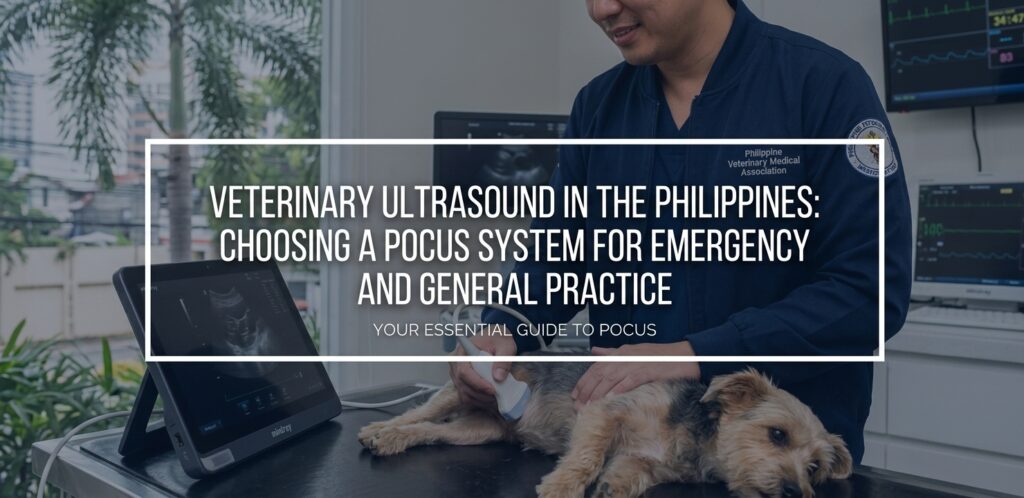
Point of care ultrasounds (POCUS) are used in veterinary practice to give vets a focused ultrasound to help give an overall picture of the patient. AFAST and TFAST can be used to give some indication if there is excess fluid in the abdomen or chest of dogs and cats. General practices usually start off with a handheld system.
When looking at veterinary ultrasound options in the Philippines the type of cases you will work with will determine what type of machine you will need. Emergency hospitals may require a machine that can be done at the patient’s bedside whilst general practices may want a machine that can be used for abdominal, reproductive and select diagnostics.
The aim is to find a machine that will work well with your clinic, provide quality images and can be used confidently by trained veterinary personnel.
What is veterinary POCUS?
Veterinary POCUS allows vets to quickly complete a focused ultrasound. Unlike a full ultrasound scan focused ultrasound looks at specific areas allowing the vet to gain answers to specific questions.
For example, a dog may receive an abdominal ultrasound after being in a road traffic accident to check for fluid within the abdomen. A cat may receive a chest ultrasound if they are having difficulty breathing to look for fluid around the lungs or heart.
This can help speed up decision making however it does not replace full imaging or other necessary tests. Training is important to ensure accurate interpretations.
What is the difference between AFAST and TFAST?
AFAST and TFAST are both focused ultrasound techniques used in veterinary emergencies. AFAST stands for Abdominal Focused Assessment with Sonography for Trauma, Triage and Tracking. This is used to identify free fluid within the abdomen. It is often used in animals who have sustained injuries, suspected internal bleeding or fluid build up.
TFAST stands for Thoracic Focused Assessment with Sonography for Trauma, Triage and Tracking. This is used to look for fluid around the lungs/heart and any signs of pneumothorax. Whilst these scans can provide useful information they do not provide a diagnosis. Vets will need to consider findings from physical examinations and other tests.
AFAST vs. TFAST: Quick Comparison
Feature | AFAST | TFAST |
Main examination area | Abdomen | Chest |
Primary purpose | Identify abdominal free fluid | Assess thoracic fluid and selected signs of pneumothorax |
Common applications | Trauma, abdominal fluid assessment, patient monitoring | Chest trauma, breathing difficulties, suspected pleural or pericardial fluid |
Examination type | Focused screening | Focused screening |
Main limitation | Does not identify every abdominal injury | Does not replace full thoracic imaging or echocardiography |
What type of ultrasound should I use during veterinary emergencies?
The type of scan will depend on the animal’s condition. AFAST can be used to look for fluid build up in the abdomen after injuries. TFAST and lung ultrasound can be used to assess patients having difficulty breathing.
The scans can help identify fluid build up, certain abnormalities within the chest and monitor changes. Further tests may be required to identify what is causing the issue.
During emergencies the priority will be to stabilise the patient. Ultrasounds should be used to assist with urgent care. Training should be provided to ensure scans are performed correctly.
How can ultrasound help identify abdominal fluid in dogs and cats?
Abdominal fluid can build up in dogs and cats due to injuries, internal bleeding, inflammation and certain diseases. An AFAST ultrasound can help vets identify any fluid in the abdomen that may not be apparent from physical examination.
The vet will carry out a focused scan looking at specific areas around the liver, spleen, kidney and bladder as these are common areas to see fluid build up.
However, just because fluid is identified it may not be clear why. Further imaging, blood tests or fluid analysis may be recommended by the vet to identify what is causing the issue and what the next steps are.
How is TFAST used for chest issues?
If the dog/cat is having difficulty breathing it can be stressful for them to be moved for multiple scans. TFAST can be used to carry out a targeted ultrasound scan with minimal manipulation. This can help identify any fluid build up around the lungs/heart and any signs of pneumothorax.
However, this will not identify all causes of difficulty breathing. Further tests may be recommended by the vet. If required, lung ultrasound protocols such as Vet BLUE can be used. The ultrasound should be used to help assess the patient and not delay urgent treatment.
Handheld or Cart Based – Which is best for my clinic?
If your clinic needs to move the machine between examination rooms, treatment and emergency areas a handheld ultrasound will be useful. Some have rechargeable batteries meaning they can be used at the patient’s bedside.
Cart based systems will generally be best for imaging areas. They may come with larger screens, more imaging functionality and multiple probe compatibility. The right machine will depend on what space you have in your clinic, how many patients you have and what imaging you require. Think about what scans you carry out most and invest in a machine that will fit your workflow and budget.
What features should I look for in veterinary imaging equipment?
Look for a machine that can carry out the imaging you require. Think about what imaging modes, probe types, screen size and settings for different species the machine can do. This will help with carrying out examinations on dogs, cats and other animals.
Consider ease of use. If many vets will be using the same machine it is important that the machine is easy to use. This can help with everyday scanning.
Ask to see a demonstration of the product and check what accessories are included. Ensure the ultrasound can carry out the scans you carry out regularly and fits your budget.
What Mindray ultrasound systems are available from MAN Pharma?
MAN Pharma has a variety of Mindray Animal Medical ultrasound systems. They have both handheld and cart based systems for general imaging and detailed imaging.
The DP-30 Vet Ultrasound System has a compact design, 12.1 inch screen and rechargeable battery. It also has Doppler functionality. The Z60 Vet Ultrasound System has a 15 inch screen and Colour Doppler.
The Vetus 7 Ultrasound System has a larger screen and veterinary settings. Before purchasing make sure the product is available, compatible with the right probes, has the right software and technical support.
MAN Pharma Veterinary Ultrasound Comparison
Model | Design | Selected published features |
DP-30 Vet | Portable | 12.1-inch display, rechargeable battery, PW Doppler |
Z60 Vet | Portable | 15-inch display, Color Doppler, rechargeable battery |
Vetus 7 | Cart-based | 21.5-inch display, veterinary presets, measurement tools |
Features are based on MAN Pharma’s published product descriptions. Available configurations and accessories should be confirmed with the supplier.
How does the Mindray Vetus range help with veterinary imaging?
The Mindray Vetus range provides veterinary ultrasound systems. Depending on the model there are animal specific settings, different imaging modes and features to help with diagnostics.
The Vet 7 has a larger screen and veterinary measurement tools. The handheld Vet E7 provides more flexibility.
Think about what you carry out in your clinic. If you carry out regular abdominal scans you may need different features compared to detailed cardiac imaging. Before purchasing make sure the product is available, has the right specifications and ask to see a demonstration from MAN Pharma.
What training is required for vets to use POCUS?
To use Point of Care Ultrasound (POCUS) vets will require training. They will need to know how to position the patient, use the probe correctly, understand normal anatomy and interpret the images. Understanding what areas to scan for the AFAST and TFAST will help identify potential abnormalities.
Practical training, supervised scanning and regular case review can help improve skills. Make sure your clinic has processes in place for recording ultrasound results. Before purchasing, ask your supplier about training available. Proper training will mean vets can confidently use POCUS and understand the limitations.
How can general veterinary clinics start offering ultrasound?
General veterinary clinics can start offering ultrasound. Firstly identify what scans you would regularly need. This could be abdominal, urinary bladder or reproductive. If you deal with emergencies you may also want to carry out AFAST and TFAST once you have completed the right training.
Ensure you have the right machine for your clinic. Think about what space you have, your budget and what you need to carry out on a regular basis. Consider what probes are available, image storage and training. If you have more complex cases it is important to have access to referral specialists. Starting off with basic scans will help vets build up their skill.
How much do veterinary ultrasound systems cost in the Philippines?
Ultrasound systems will vary depending on what model, imaging, probes and accessories are included. Handheld systems may differ in price compared to cart based systems.
Ask for a quotation based on what you need. Ask what probes, software and accessories are included.
It is also important to think about maintenance, warranty, training and upgrade options. Ensure your supplier can provide local technical support and replacement parts. Knowing what the costs are will help with budgeting.
How do I choose a veterinary ultrasound supplier in the Philippines?
There is more to choosing a veterinary ultrasound supplier than just looking at costs. Ask about demonstrations, installation, training, warranty and maintenance. If your clinic is outside of Metro Manila make sure you know how the products will be delivered, if they can provide local technical support and replacement parts.
At MAN Pharma, we provide veterinary imaging and diagnostic equipment in the Philippines. We were also involved in PAHA 2026 to showcase animal healthcare technology. Speak to us about what patient volume, common scans and imaging you need to ensure you get the right ultrasound for your daily workflow and budget.
Frequently Asked Questions About Veterinary Ultrasound
What is veterinary POCUS used for?
Veterinary POCUS is used for focused ultrasound scans to help answer specific questions. It is commonly used to identify fluid within the abdomen/chest and help with emergency patient assessment. It can help complement physical examination and other diagnostic tests.
What is the difference between AFAST and TFAST?
AFAST is used to look at the abdomen and is commonly used to look for free fluid. TFAST looks at select areas of the chest to identify fluid and other findings. It can identify certain signs related to pneumothorax.
Can I use a handheld ultrasound machine in my veterinary clinic?
Yes! If you have the correct probes and imaging you can use a handheld ultrasound machine to help with your veterinary examinations. The correct machine will depend on what services you provide, what patients you have and what training you have.
What Mindray veterinary ultrasound systems are listed on MAN Pharma?
There are a few Mindray systems listed on the MAN Pharma website. These include the DP-30 Vet, Z60 Vet and Vetus 7. Please contact the company directly to confirm what is available, what accessories are available and what configurations are available.
Do vets need training to carry out AFAST and TFAST?
Yes. Training is important so you can gain useful images, recognise normal anatomy, identify abnormalities and understand the limitations of focused scanning.
Choose the Right Veterinary Ultrasound Equipment
Veterinary ultrasound can help with emergency and routine examinations. This includes AFAST, TFAST and detailed imaging. The right machine will depend on what services you provide and what your patients require.
Consider what quality of images, portability, probe options, training and technical support you will need. The machine should fit your daily workflow and budget.
At MAN Pharma, we provide Mindray veterinary ultrasound systems. Contact us at https://manpharma.ph/contact-us/ to find out about our FREE Lab Upgrade Assessment and find the right imaging equipment for your practice.
For licensed and trained veterinary healthcare professionals. POCUS is a focused assessment tool and does not replace comprehensive diagnostic imaging, patient stabilization, or professional veterinary judgment.