
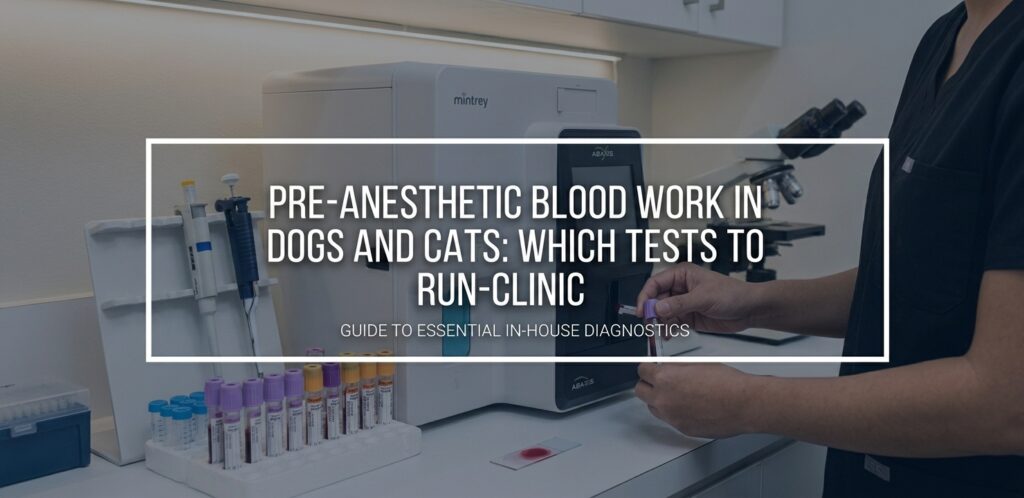
Pre-anesthetic bloodwork for dogs and cats will typically involve a complete blood count to look at the red blood cells, white blood cells and platelets, plus a chemistry panel to look at kidney function, liver markers, glucose and protein values. Senior or unwell patients may require further tests. Being able to offer in house bloodwork means you can have results available before deciding if it is safe to go ahead with anaesthesia.
You will want to ensure your dog or cat receives the correct tests for pre-anesthetic bloodwork. This can vary depending on age, medical history, physical exam and what they are being treated for.
While bloodwork can give you an insight into any issues that your patient may have, it does not always allow you to predict any complications. You should always perform a thorough examination, monitor appropriately and tailor your anaesthetic protocol.
Why Is Blood Work Important?
Prior to surgery you want to ensure you know if there are any underlying health issues that could cause problems with anaesthesia. Sometimes your dog or cat may not show any obvious signs.
Testing can identify issues such as anaemia, kidney issues, altered liver enzymes and abnormal blood sugars. Based on what you find you may decide to offer further tests, alter your anaesthetic protocol or delay surgery.
However, just because everything looks normal on the bloodwork does not mean that there won’t be any issues with anaesthesia. You will have a better understanding of your animal’s health, and make informed decisions to help prepare for any potential complications.
What Tests Are Included in a Basic Pre-Anesthetic Panel?
A basic panel for pre-anesthetic bloodwork will often contain a complete blood count and some chemistry values. This can help identify any issues with red blood cells, kidney function, liver markers, glucose and other factors.
Your choice of tests will vary between clinics. Some will have a set panel they will run for routine procedures. Others will decide based on their patient’s medical history, physical exam and anaesthetic risk.
Some common tests you will see include:
- Complete blood count – red blood cells, white blood cells and platelets.
- Kidney values – BUN and creatinine.
- Liver values – ALT, ALP, albumin and others.
- Glucose – can help identify if they have low or high glucose.
Electrolytes, urinalysis and other tests may also be included. A basic panel shouldn’t contain all the tests available but should give useful information.
What Does a CBC Reveal Before Surgery?
A complete blood count can help your vet identify if there are any health concerns with your dog or cat’s red blood cells, white blood cells and platelets. This can help identify any concerns.
Low red blood cells can indicate anemia. Altered white blood cells can indicate inflammation or illness. Low platelets can cause concern with bleeding during surgery.
These results will not always tell you what the issue is. Your vet may recommend further tests or a blood smear. In spay and neuter clinics this can help identify any issues.
Which Kidney and Liver Values Matter Before Anesthesia?
A blood chemistry panel can help your vet identify any issues with your animal’s kidney or liver. Common kidney values include BUN and creatinine. Common liver values include ALT, ALP, albumin and Bilirubin. If these values are altered it can indicate there are health concerns.
This does not always mean there is organ failure but your vet will take into consideration their hydration, medications, symptoms and previous results. If there are any significant alterations further tests may be required or alterations made to your anaesthetic protocol.
Do Healthy Dogs and Cats Need Blood Tests Before Surgery?
Sometimes even fit looking animals can have underlying issues. Pre-anesthetic bloodwork can help identify any potential concerns. However, if your animal is young and fit they may not require the same tests as an older animal with existing health issues.
Your vet will take into consideration their age, medical history, medications and what they are being treated for. In general veterinary or spay/neuter clinics it can help to have a standardised screening process. However, they should always be based on the individual animal.
What Extra Tests Might Senior Dogs Need Before Anesthesia?
Older dogs can sometimes develop health issues that aren’t always obvious during routine check-ups. Kidney issues, heart disease and hormonal changes can cause issues with how they react to anaesthesia. Therefore it is important to do some extra screening.
A senior dog blood panel may include a complete blood count, blood chemistry, electrolytes and urinalysis. Depending on the dog’s condition they may also require blood pressure and heart exams.
However, just because they are old does not mean they are unsuitable for anaesthesia. Your vet will take their overall health, medical history and previous results into consideration. They may recommend further tests or alterations to your anaesthetic protocol.
What Should You Check For Senior Cats?
Senior cats can sometimes develop health issues. Sometimes changes in appetite, weight and drinking can indicate underlying issues.
A complete blood count, blood chemistry and urinalysis may be recommended. Blood pressure and thyroid testing may also be required. If there are suspected kidney issues or hyperthyroidism.
Older cats can become stressed in the clinic so it is important to handle them gently. Your vet should decide what tests to run based on their health, medical history and what they are being treated for.
Additional Tests For Unwell Patients
If your dog or cat are unwell they may require extra tests. Dehydration, anaemia, infections and metabolic disorders can cause issues with how they react to anaesthesia. Your vet may recommend testing electrolytes, glucose, kidney and liver values or blood clotting.
If there are suspected heart or respiratory issues further tests may be required. If the surgery isn’t an emergency your vet may recommend treating certain health issues first. If it is urgent they will carefully assess to try and balance the need for surgery with potential risks of anaesthesia.
How Does In-House Testing Change Pre-Surgery Workflow?
Having an in house vet lab means you can run some tests. This can help your vet get important results before going ahead with anaesthesia.
If you are doing a number of spay and neuter procedures you can take blood samples when they come in and run them while you prepare them. This can help reduce delays depending on what equipment you have and how busy your lab is.
However, you need to ensure samples are handled correctly, equipment is well maintained and quality control is in place. You may still require external labs for specialist tests.
When Should You Repeat Pre-Anesthetic Bloodwork?
Bloodwork will tell you how your dog or cat are at the time of sampling. If they are fit and have had normal results recently they may not require further tests. However, if they have existing illnesses or their health is fluctuating they may require more frequent tests.
Your vet will take a number of factors into consideration. Previous results, new symptoms, changes in medication and what they are being treated for. If they are unwell or in hospital, updated bloodwork can help identify any changes that could affect anaesthesia.
There is no set time frame for testing. Your vet should assess each individual patient to decide if they require further tests. This can help prevent unnecessary testing.
What Analyzers Can I Use?
In veterinary clinics offering in house bloodwork you will need analyzers that can help with routine pre-anesthetic testing. Hematology analysers can help identify red blood cells, white blood cells and platelets. Chemistry analysers can help identify organ function and other issues.
At MAN Pharma, we offer a range of analysers for complete blood counts. The ProCyte One Vet Hematology Analyzer can help measure 24 whole blood parameters. The ProCyte Dx Vet Hematology Analyzer can help with more detailed blood cell analysis.
For chemistry, the Catalyst One Vet Chemistry Analyzer offers a variety of tests. When choosing you should consider what tests are available, sample requirements, reagent costs and support. Choosing equipment that fits with your daily testing can help make pre-surgery testing easier.
What Should I Consider?
Setting up an in house vet lab will require you to have adequate space, trained staff, reliable reagents and well maintained equipment. Before investing consider how many complete blood counts and chemistries you run per week. Compare the cost of doing them in house vs externally.
Also consider what requirements your equipment has. Storage, power and quality control. Ask your supplier about installation, training, reagent availability and support. Choosing equipment that fits your requirements can help to prevent unnecessary costs and make daily testing easier.
How Can I Make Pre-Anesthetic Testing More Consistent?
Having a clear process for pre-anesthetic testing can help prepare your patients for surgery. Start by looking at their medical history and performing a physical exam. Based on their age, health, medications and what they are being treated for your vet can recommend blood tests. Any unusual results should be checked.
Having trained staff will help. Ensure you have a consistent process for taking samples, labelling, running analysers and checking results. Regularly reviewing your lab protocols can help ensure testing is reliable, prevent unnecessary testing and make more informed decisions.
Frequently Asked Questions About Pre-Anesthetic Blood Work
What blood tests are typically done on dogs prior to surgery?
Typically a complete blood count and some chemistry tests would be run. This can include red blood cells, white blood cells, platelets, kidney values, liver enzymes and glucose. Further tests depend on the dog’s condition.
Do cats require bloodwork prior to surgery?
Bloodwork can give useful information prior to anaesthesia. This would depend on their age, clinical history, physical exam and what they are being treated for.
Do senior dogs require a more detailed blood panel?
If there are signs of underlying disease from their medical history or physical exam they may benefit from further testing. Chemistry, complete blood count, electrolytes, urinalysis and other tests may be recommended.
Can I guarantee anaesthesia is safe if the bloodwork is normal?
No. Just because everything is normal in their bloodwork doesn’t mean they don’t have any issues. A thorough physical exam, appropriate monitoring, trained staff and tailored anaesthetic protocol is still required.
Who can benefit from an in house vet lab?
General veterinary clinics, spay/neuter facilities and animal hospitals who regularly run complete blood counts and chemistries may benefit from in-house analysers. It depends on how many patients you have, how many staff you have and your lab requirements.
Improve Patient Preparation With Pre-Anesthetic Testing
Pre-anesthetic bloodwork can help your vet understand how your dog or cat are. Choosing the correct tests can help identify any potential issues and help make anaesthesia safer.
If you regularly run tests you can make patient assessment easier with reliable haematology and chemistry testing. Always ensure testing is based on the individual animal.
We offer veterinary diagnostic equipment. Contact us at https://manpharma.ph/contact-us/ to ask about our FREE Lab Upgrade Assessment.
For licensed and trained veterinary healthcare professionals. This article is intended for educational purposes and does not replace veterinary examination, clinical judgment, or appropriate anesthesia monitoring.