
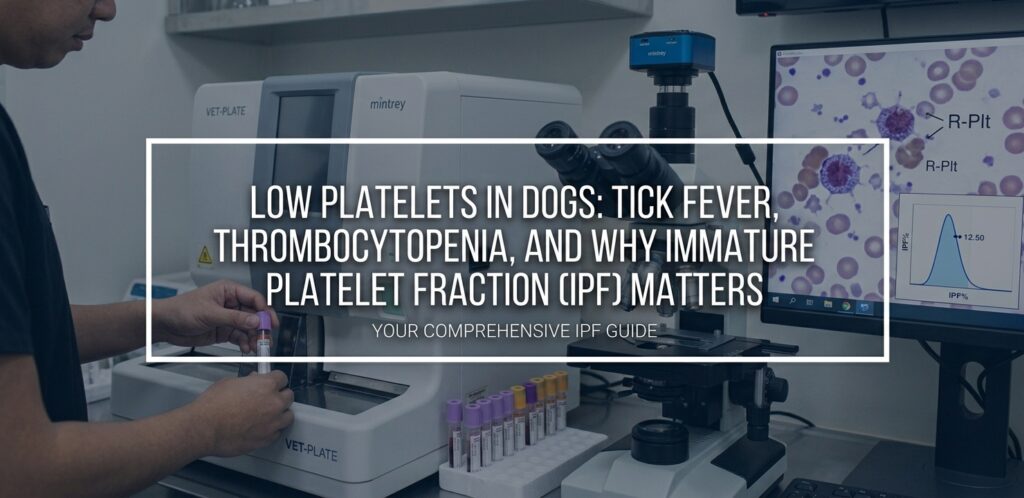
Low platelet levels in dogs can occur due to decreased production of platelets, rapid destruction or increased consumption. In the Philippines, tick borne infections such as ehrlichiosis will often be investigated for. The immature platelet fraction (IPF) can give extra insight into platelet production.
Low platelet levels can raise many questions for the vet. Is the dog battling an infection? Are immune mediated diseases involved?
Has the bone marrow responded appropriately? Understanding the changes within the complete blood count will help with further investigations.
What is a Normal Platelet Level in Dogs?
Platelets are important for controlling bleeding. When a dog suffers an injury platelets will gather to form clots within damaged blood vessels. If the platelet level drops too low the dog may suffer with easy bruising or abnormal bleeding.
Normal platelet levels in dogs are approximately 186,000-545,000 per microlitre (Cornell University eClinpath). It can vary between different labs and analysers. Thrombocytopenia refers to platelet levels falling below the reference range. The vet will investigate symptoms, history and blood smears to understand what is causing the drop.
What Can Cause Thrombocytopenia in Dogs?
There are a few reasons a dog may have low platelet levels. Some conditions can affect platelet production within the bone marrow. Others can cause platelets to be destroyed, consumed or temporarily stored.
Generally there are four main reasons the vet will consider:
- Low platelet production – The bone marrow is not producing enough platelets.
- High platelet destruction – Platelets are being removed from the circulation. Sometimes immune mediation.
- High platelet consumption – Platelets are being rapidly consumed during inflammation, bleeding and abnormal clotting.
- Storage – Platelets are being stored in organs such as the spleen.
Sometimes multiple reasons can cause a drop in platelets. Infections, medications, cancers and immune mediated conditions may be a contributing factor. Before investigating it is important to confirm the platelet levels are genuinely low. Platelets can clump during sampling resulting in falsely low levels. Blood smears can help with this.
How is Tick Fever Related to Low Platelet Levels?
Tick borne infections can be a common reason for platelet levels to drop. In the Philippines canine ehrlichiosis can be a concern as it is caused by Ehrlichia canis. Other infections can also cause changes to blood cell counts such as anaplasmosis and babesiosis.
Dogs with tick fever can display symptoms such as a fever, lack of appetite, lethargy, pale gums and abnormal bruising. Some can suffer with bleeding issues.
Research was conducted in Cebu with dogs and tick borne infections were found to be associated with thrombocytopenia. Just because the platelet levels are low does not mean that the dog has tick fever. The vet will still need to examine the dog and run appropriate tests.
Why Can Ehrlichiosis Affect Platelet Production?
Canine ehrlichiosis can cause a reduction in platelet levels. During infection platelets can be rapidly destroyed by the immune system. Inflammation can affect the lifespan of platelets. Severe or chronic infections can also affect platelet production.
Not all dogs will have the same results. Some will have mildly low platelet levels but still be active. Others can have severe thrombocytopenia, anaemia and bleeding issues.
The stage of infection can affect these. The vet may request repeat bloods, blood smears and further testing.
What is Immature Platelet Fraction?
Immature platelet fraction (IPF) refers to the percentage of young platelets that have been released from the bone marrow. They contain small amounts of RNA which can be detected by some haematology analysers. This can help vets understand how much platelet production is occurring.
If platelets are being destroyed or consumed then more young platelets may be released from the bone marrow causing increased IPF levels. If platelet production is low then IPF may be low. Vets will use this alongside bloods and other tests to help investigate thrombocytopenia.
How Can IPF Help Determine Platelet Destruction or Low Production?
When a dog has low platelet levels it is important to understand if the bone marrow is producing enough to replace them. The immature platelet fraction (IPF) can help to understand this. If the IPF is increased this may indicate platelets are being destroyed or consumed. If it is low it may indicate low production.
A 2024 study published in the Journal of Veterinary Internal Medicine showed dogs and cats with peripheral thrombocytopenia had higher IPF levels compared to those with bone marrow issues. Whilst IPF can help it will not confirm the cause.
Understanding Platelet Count and IPF Results
Platelet count | IPF pattern | Possible interpretation |
Low | Increased | Active platelet production; peripheral destruction or consumption may be involved |
Low | Low | Reduced platelet production may be suspected |
Low | Within reference range | Response may be insufficient; requires clinical interpretation |
Recovering | Increased or changing | May reflect platelet regeneration during recovery |
Normal | Within reference range | Platelet production and circulation may be balanced |
These patterns are general. IPF reference intervals and decision limits depend on the analyzer, species, and laboratory validation.
How Can IPF Help with Interpretation of Canine Bloods?
Complete bloods can help the vet to understand how the dogs’ red blood cells, white blood cells and platelets are. Seeing the changes can help to determine any changes which may need further investigation.
If the dog has low platelets the immature platelet fraction (IPF) can help to determine if new platelets are being produced by the bone marrow. This can be useful to help understand thrombocytopenia, especially if other blood cell changes are present.
Seeing previous results can help to understand if there have been any changes. Any abnormal results, platelet clumping and blood smears should be reviewed by the vet.
What are the Signs of Dangerously Low Platelet Levels?
Dogs with low platelet levels may not show any obvious signs. Especially if the levels are not too low. As the levels drop further the risk of abnormal bruising can increase. How severe this is can depend on the dog’s overall health.
Abnormal bruising can be indicated by small red or purple spots on the skin or gums. Unexplained bruising, nose bleeds, blood in urine/stool and abnormal weakness. If the dog has pale gums, difficulty breathing or collapses this should be seen by a vet immediately.
Platelet levels below approximately 30,000/µL increase the chance of spontaneous bleeding (Cornell University eClinpath). Any dogs that are actively bleeding should be seen by a vet as soon as possible.
How Will the Vet Diagnose Tick Borne Thrombocytopenia?
If the dog is suspected to have a tick borne infection the vet will generally look at the dogs history and see if they have any symptoms. This can help to provide some clues. Even if they don’t have ticks visible they may have been exposed to ticks in the past. They may have been unwell recently or have a history of parasite prevention.
Performing complete bloods can help to determine if they have low platelet levels and any other blood changes. The vet may look at blood smears and recommend performing antibody and PCR tests to help determine if they have infections such as ehrlichiosis.
Blood results may not be enough to determine if they have an active infection. The timing of the tests and the dog’s condition will also be a factor. Combining the lab results with a physical examination can help to determine the likely cause.
When Should the Vet Perform Repeat Platelet Levels and IPF?
Sometimes one blood test may not give the full picture. The vet may recommend repeat platelet levels and immature platelet fraction (IPF) if available. This can help to see how they are responding to treatment or improving. This is especially important if they have abnormally low levels or are suffering with bleeding.
Generally the following factors will be considered:
- Severity – Dogs with very low platelet levels may need to be monitored more frequently.
- Bleeding – If the dog is actively bleeding this should be assessed straight away.
- Response to treatment – Repeating the tests can help to see if there are changes in platelet levels.
- IPF trends – IPF trends can give some indication of how the bone marrow is responding.
Consistent testing helps veterinarians monitor progress and adjust care when necessary.
How Will the Vet Decide if Low Platelets Are an Emergency?
Not all dogs with low platelet levels will be an emergency. The vet will look at the platelet levels, symptoms and overall health of the dog. If the platelet levels are only slightly low and they are not bleeding they may just need further testing. However, if the dog is suffering with severe thrombocytopenia, abnormal bruising, active bleeding, pale gums and weakness they will need to be seen immediately. They may also have an increased risk of bleeding during surgery and other procedures. Whilst the immature platelet fraction (IPF) can provide some information the vet will use clinical findings and other test results to determine how urgent treatment is.
Why is Reliable Haematology Equipment Important in Vets?
Having reliable haematology equipment means the vet can investigate any blood cell changes and monitor how they are responding to treatment if they are displaying signs of tick borne disease. Performing tests in house means less samples need to be sent out.
When choosing the right analyser for your veterinary clinic in the Philippines you should consider how many tests you would carry out, availability of reagents, maintenance and technical support. Correct sample handling and regular quality control is also important.
MAN Pharma supplies veterinary diagnostic equipment. We have the ProCyte Dx Vet Hematology Analyzer and ProCyte One Vet Hematology Analyzer Both can be used for complete blood count testing. If you need to know if they can perform IPF please check with your supplier.
How Can Vets Improve Thrombocytopenia?
Accurate testing is important when managing thrombocytopenia. The vet should confirm low platelet levels, look at blood smears and ensure there are no errors in the sample before investigating the cause.
If the dog has a suspected tick borne infection the vet should look at the complete bloods and any appropriate infectious disease tests. If immature platelet fraction (IPF) is available this can help the vet to understand how the bone marrow is responding to the low platelet levels.
Correct training and reliable equipment is important. At MAN Pharma, we support veterinary professionals with diagnostic solutions and education. We also participate PAHA 2026 to keep veterinary clinics up to date with veterinary technology.
Frequently Asked Questions About Low Platelets in Dogs
What is considered a low platelet level in dogs?
Any platelet level below the reference range of the lab. For dogs the reference range is approximately 186,000-545,000 (Cornell University eClinpath). The results should be interpreted based on the validated range provided by the lab.
Can tick fever cause low platelet levels?
Yes. Tick borne infections such as canine ehrlichiosis can cause thrombocytopenia. Other illnesses can cause low platelet levels so the vet will need to run tests to find out the cause.
Can dogs recover from thrombocytopenia?
This depends on the underlying cause, severity and how they are responding to appropriate treatment. Some dogs will recover once the cause is controlled. Some may need to be monitored for longer.
What does a high immature platelet fraction mean?
A high immature platelet fraction can indicate more young platelets are being released from the bone marrow. This can occur if platelets are being destroyed. This should not be interpreted on its own.
Do all haematology analysers perform IPF?
No. Some analysers will not report immature platelet fraction. You should check with the manufacturer to see what is available for your species.
Understanding Low Platelet Levels in Dogs
Finding that a dog has low platelet levels is only the first step. The vet will need to understand why they are low. This can be due to a tick borne infection, immune related disease or low platelet production.
Complete bloods, blood smears and further testing can help to determine the cause. If immature platelet fraction (IPF) is available this can give more information on how the bone marrow is responding.
MAN Pharma can help to improve diagnostics at your clinic. Visit our website to see what equipment we can offer. https://manpharma.ph/ , we can also provide a FREE Lab Upgrade Assessment.
For licensed and trained veterinary healthcare professionals. This article is intended for educational purposes and does not replace patient-specific clinical assessment, diagnostic testing, or professional veterinary judgment.